There are few shows I binge watch faster than Cobra Kai. The nostalgia is incredible and has, more than once, led me to rewatch one of the old films. The first one, which Pat Morita won an oscar for! Ebert loved this film, and his write-up is lovely, opening with the line, “I didn’t want to see this film.” Even while missing Mr. Miyagi’s ethnicity.
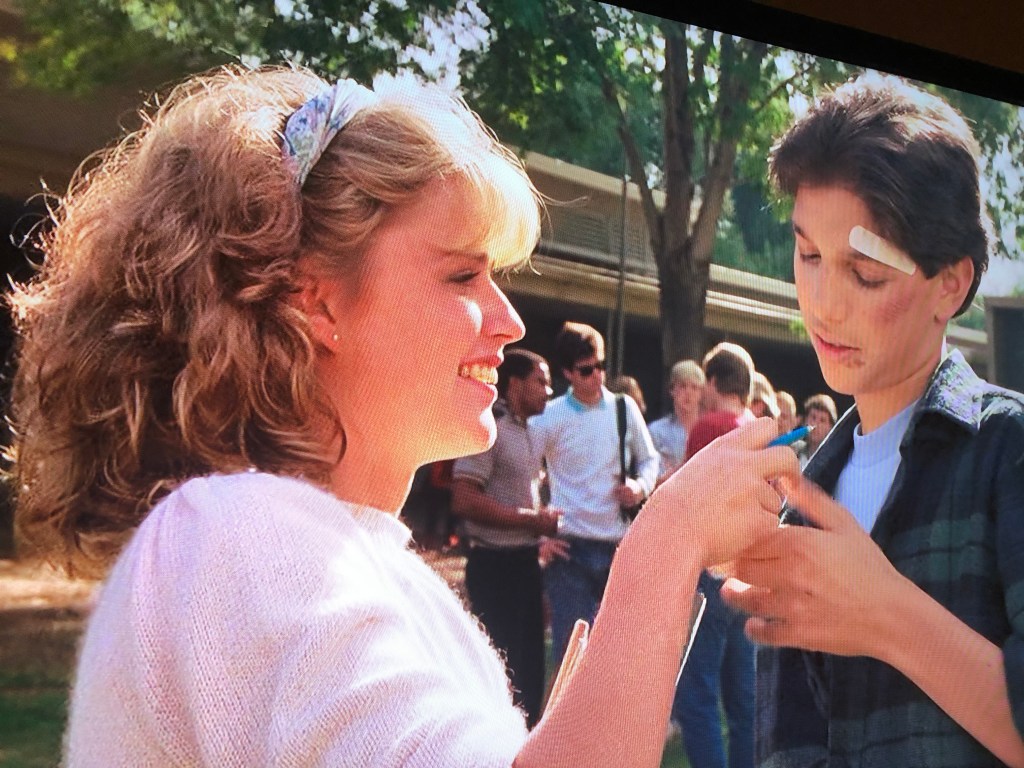
One part of the movie that is crucial. And subtle. Is that you are unsure if you trust Elizabeth Shue early on. She’s playing the role of the wealthy girl who may or may not be a snob. Cheerleader, etc. She isn’t kind to Johnnie, but when Daniel gets annihilated on the beach, she doesn’t push through and help Daniel either.
It isn’t until she gives Daniel her number that we start to come around.
Enemy of the State is a delightful romp. Where the plot suffers, a sweaty Tom Sizemore rescues, or Will Smith charges through on pure charisma, or Gene Hackman shouts at someone, or Lisa Bonet moves her hair around.
If you love this film, and want to love it even more, watch the Conversation.
Some of Ebert’s cynicism or fatigue with films is on display in his review and especially in his comparison with the Conversation. Nevertheless, he is spot on here, “the standoff at the end edges perilously close to the ridiculous.” Perhaps my born-in-cynicism makes me a larger fan than Ebert.
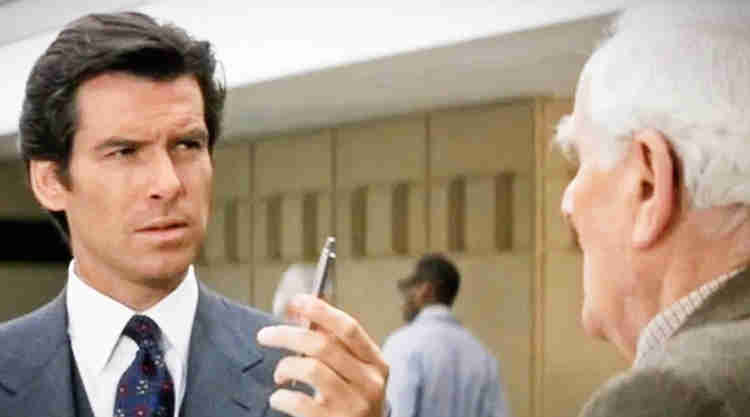
Seth Green is the NSA agent who leads the bugging job on Will Smith. Where they replace his watch, pen, belt buckle, shoes, and I can’t remember what else. Smith dresses immaculately, and this includes a Mont Blanc. In a classic (for my purposes), negating-proof of my theory, Green answers the rookie NSA agent, “Is that a Parker Pen?” “No. It’s a Mont Blanc.” Regina King could have one, the congressman, but easiest would be Hackman. But there isn’t one featured because no one is truly good, or innocent or even trying to be. Which is thy the line is iconic. At least for such niche purposes as this website. (And my cc disagrees with my memory on what is said in the van, you can adjudicate at your leisure).
My 14 year old (now 17) and I have been rewatching films that are dear to me and (hopefully) interesting to her. The growth in John Hughes from 16 Candles (which did not hold up well… or perhaps at all) to the Breakfast Club and then Ferris Bueller was incredibly fun and gave us a lot to talk about. Her favorite lines are, “Pardon my French, but you’re an asshole! Asshole!” And, “Screws fall out all the time, the world is an imperfect place.” This growth was not linear, he filmed Breakfast Club and Ferris at the same time, but you see incredible development in the films.
Breakfast Club has (even if you include the parents – one of the only times we see John Hughes. And his wife). It is a lonely movie, set in a large school and the pace of the movie is so Saturday. You would not see Carl during a regular session in the library on a Tuesday, he and the principal drinking Schlitz beers as Carl extorts him? Not a Thursday occurrence at Shermer High (https://thebreakfastclub.fandom.com/wiki/Shermer_High_School). As many have remarked, the movie is a play – done exceptionally well.
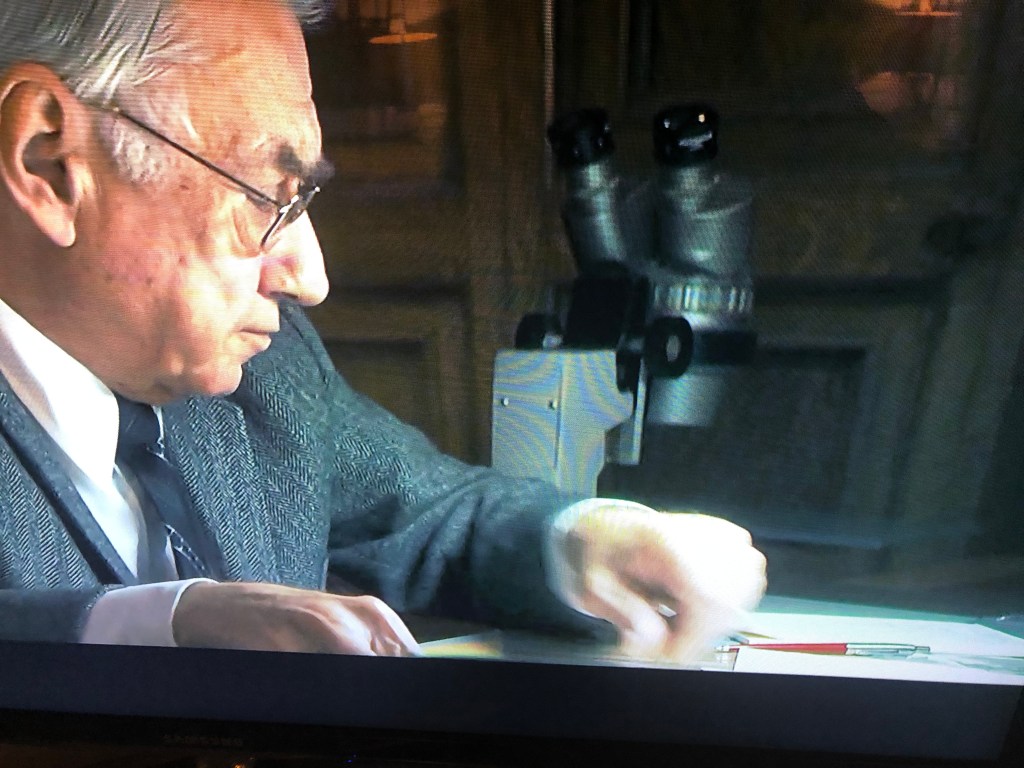
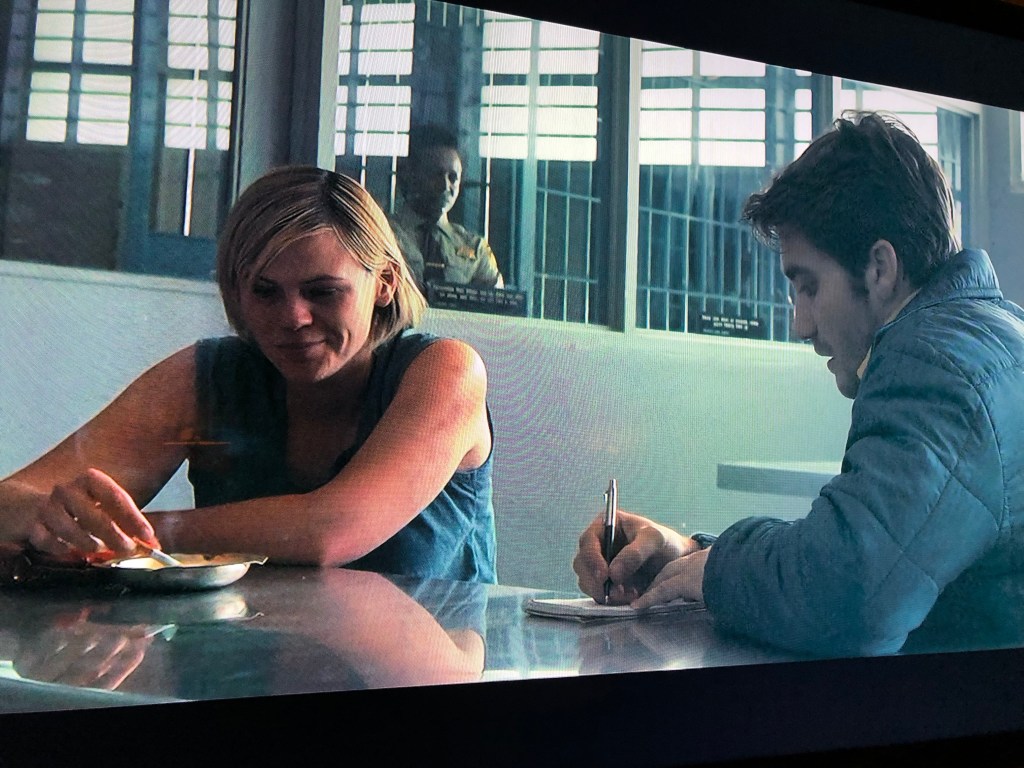
What do we know about the jotter from other films? It has many purposes, but primarily it displays an easy-to-overlook dignity. The hero rarely, if ever, has a jotter because you know her or him immediately. When the hero does have a jotter that means that the culture of the film and the story are so horrific that their nobility must be even more obvious than usual (examples: Se7en and Zodiac). The pen in Breakfast Club finds its way into an unlikely benevolent accomplice — Carl.
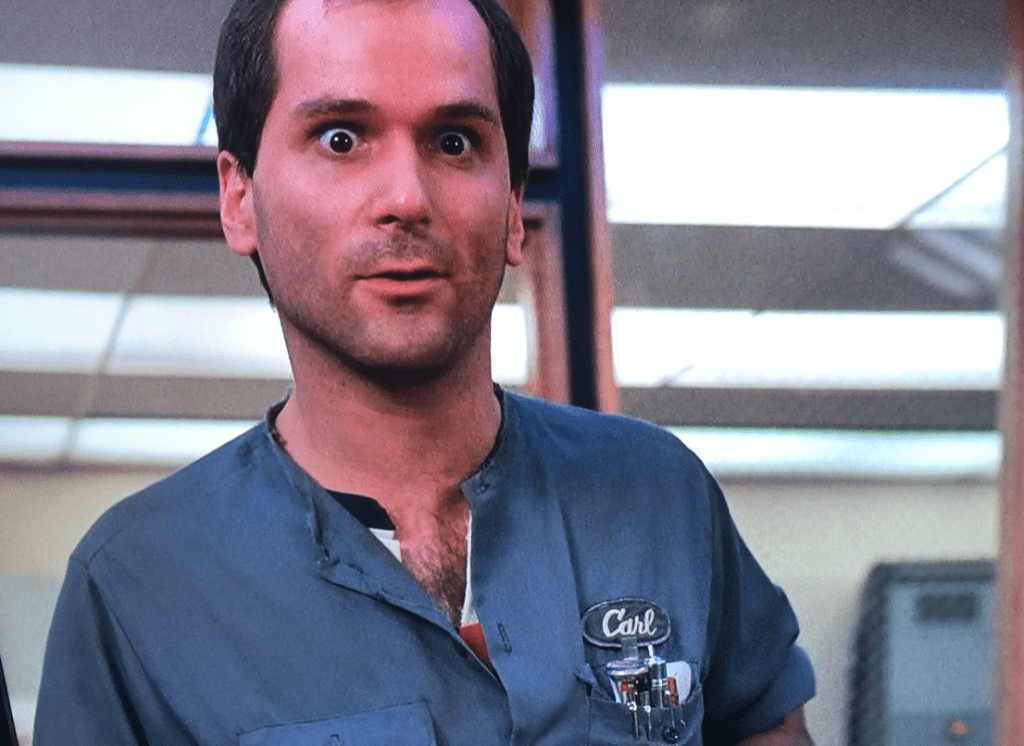
Enter the master of Shermer’s custodial arts. Perhaps you like Carl, especially when he calls out Principal Vernon for reading files labeled confidential. At least, you like him if you’re on the kid’s side and understand the movements of the film. Carl is the only character who, literally, gets the best of every other character in the film. Bender and Allison don’t like him for exactly one minute, until he leaves with the spectacular nod to the students, “by the way, that clock is 20 minutes slow”.
Bender tries to mock him, alongside Brian ignoring his obvious friendship with Carl. Andrew and Claire are trying to be cooler than the moment, but if Carl doesn’t get the better of Bender on balance of their little fight, he wins them all over with the clock reference. And I might add, Bender gave up fighting with Carl — who else does this happen with? Who else gets the last word with John Bender?
Vernon tries both to dodge Carl’s wisdom about the kids and the illegal file-reading Vernon is doing out of boredom and general malice. A question for another writer is, who is the true terrorist of the film – Vernon or John? We don’t know if he successfully blackmails Vernon for the 50 bucks. We do see them sharing beers later without Vernon realizing the janitor is wiser towards all-things-Shermer than he is. Though Carl knows it, “I am the eyes and the ears of this institution.” Capelos’ character was a collaborative move on Hughes’ part. He began with Rick Moranis, who was going to play the janitor as a Russian-immigrant. The producer put his foot down against that idea. There was also, at one point, a gym teacher named Robin. Ally Sheedy, Molly Ringwald and a co-producer objected to the objectification of Robin through a peeping tom incident by Vernon. Hughes responded by giving Carl Robin’s lines.
These moves display the change in Hughes from 16 Candles and Weird Science to Breakfast Club/Ferris, etc. In a pretty far-reaching article, Molly Ringwald talks about the movie’s staying power and also the confrontations and/or engagements with John Hughes.
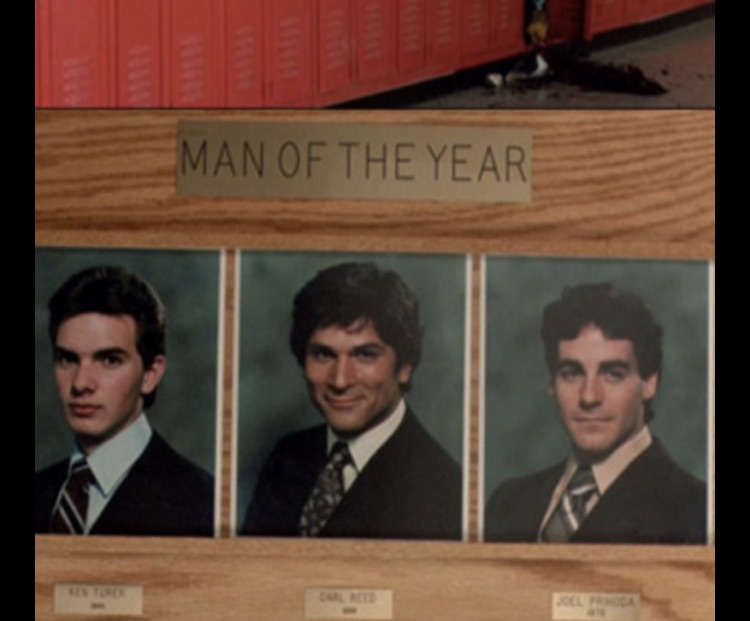
In one scene Carl has one jotter, in a later scene two. He doesn’t pull one out ever, there is no need for Carl to grow or transform as a character. He may be the only whole person in the entire film. And he was Shermer’s man of the year in 1969. Unpack that in light of Vernon and the Breakfast Club proper! What happened to him between Man of the Year in 1969 and March of 1984?
Capelos did a lot of work we never saw for Hughes in the Breakfast Club, but if you wonder about his comedic chops, he is the bohunk in 16 Candles, and had a nice career.
All this to say: only Carl gets the better of, literally, everyone else in the film. The jotter gives you a hint of that, if you will but follow it. 🙂
David Fincher’s prop director loves Parker jotters. These men and women will not be acclaimed for what they do in this film. They will bang their heads against walls, doggedly investigate, and one will write books about the Zodiac murders. But they will not succeed, leading to one of two films I’m aware of where nearly every character has a jotter.
Ruffalo’s Tosche was the inspiration for Dirty Harry. He coached Steve McQueen for Bullitt, but here he is an investigator, and debilitating realist. While Roger Ebert (mostly) liked David Fincher, this film is more celebrated than most of his reviews of Fincher films. He candidly describes Fincher’s genius, even as it relates to Alien 3. He wrote about Se7en twice – with awe and respect – but incredible brevity compared to Zodiac. Perhaps because of the wildly different endings.
What does it say about a director, when his apex mountain, is about a serial killer who is never caught and the men whose lives were swept along and/or destroyed in the aftermath?
Pieces of a woman is a haunting film about… regular life. The silence across the film deserves a best supporting actress nod — it is powerful and uncomfortable. From the beginning of the trauma through to the end of the film, the lack of interest, much less actual explanation, in explaining all that happens makes breathing laborious.
All that is good and could be good, that which looms so bright in the first scenes disappears in the second. Grief and pain and the hurt of words and the hurt of hands and the hurt of money-abused-through power, and relationships abused through all of the above.
Spoiler Alert: do not keep reading if you have not seen the movie and plan to see it.
The judge allows her to speak, ruining her own case but fighting for humanity of all nearby. Her attorney, whose loneliness looms violent and powerful. Herself who becomes. Her mother who will finally hear her, if only to avoid contempt. None for Shia who cannot be in the world as strongly as he is. Pieces of a woman gave me vertigo, in a haunting and beautiful way, but vertigo nonetheless.
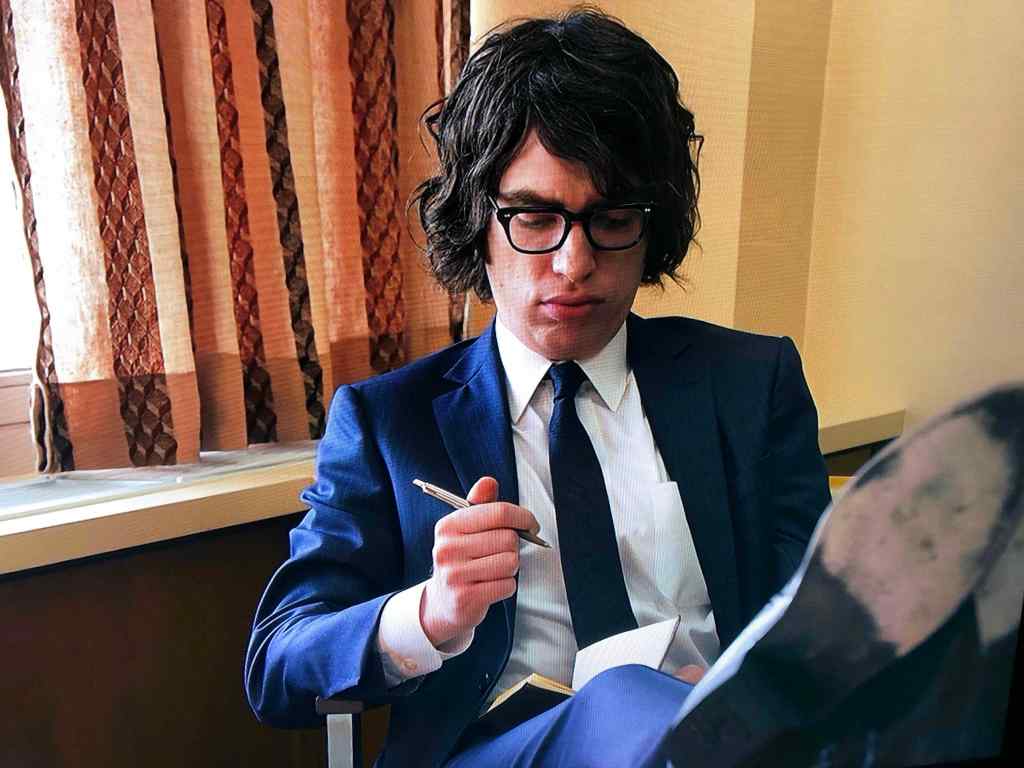
My daughter asked me to pause “A Stupid and Futile Gesture” a few days ago and I paused on Domnhall Gleeson holding a light brown Parker Jotter. I would have missed it otherwise, though I would have predicted he would be the holder of the pen were it in the film.
My dad loves the yearbook National Lampoon published. He loved telling me that his fraternity could watch Animal House and yawn. Lorne Michaels pilfered National Lampoon to begin Saturday Night Live. Who knows who Chevy Chase is without National Lampoon, not to mention Gilda Radner, Bill Murray, etc.
None of this is built or developed without Gleeson’s character, Henry Beard. After beginning National Lampoon together, Doug Kenney leaves for 9 months with a one line note left to explain. Beard keeps it together, though he isn’t long for the magazine. He keeps his promise to leave when it isn’t fun anymore. Beard ran the magazine for five years.
Miles Davis once quipped that he changed music. Beard and Kenney changed comedy, and through that – American culture. There is no Doug Kenney without Beard. The short, tragic, and hilarious film accomplishes all this in the style of an 80s movie – 90 minutes, lots of laughs, not too proud of itself.
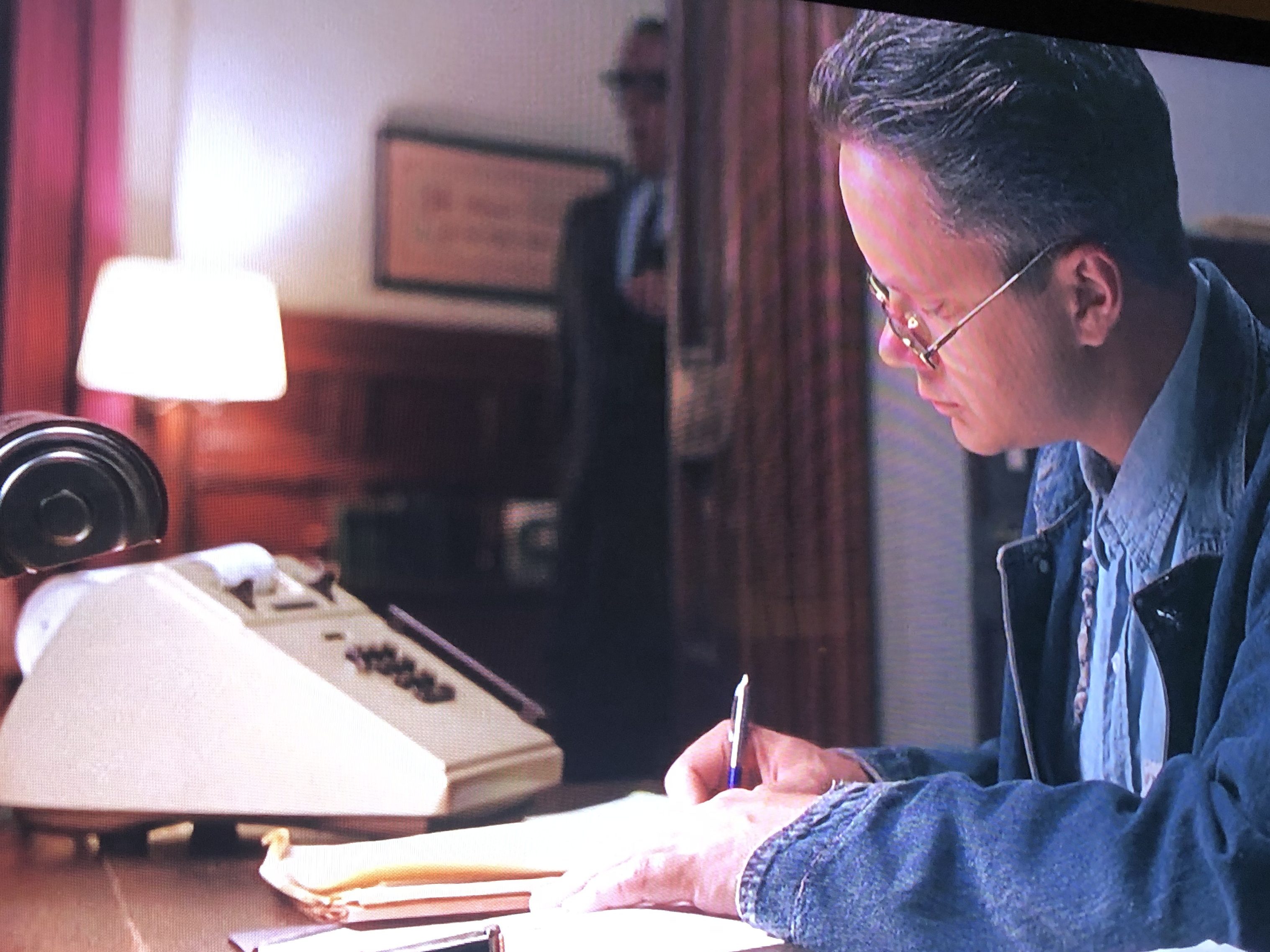
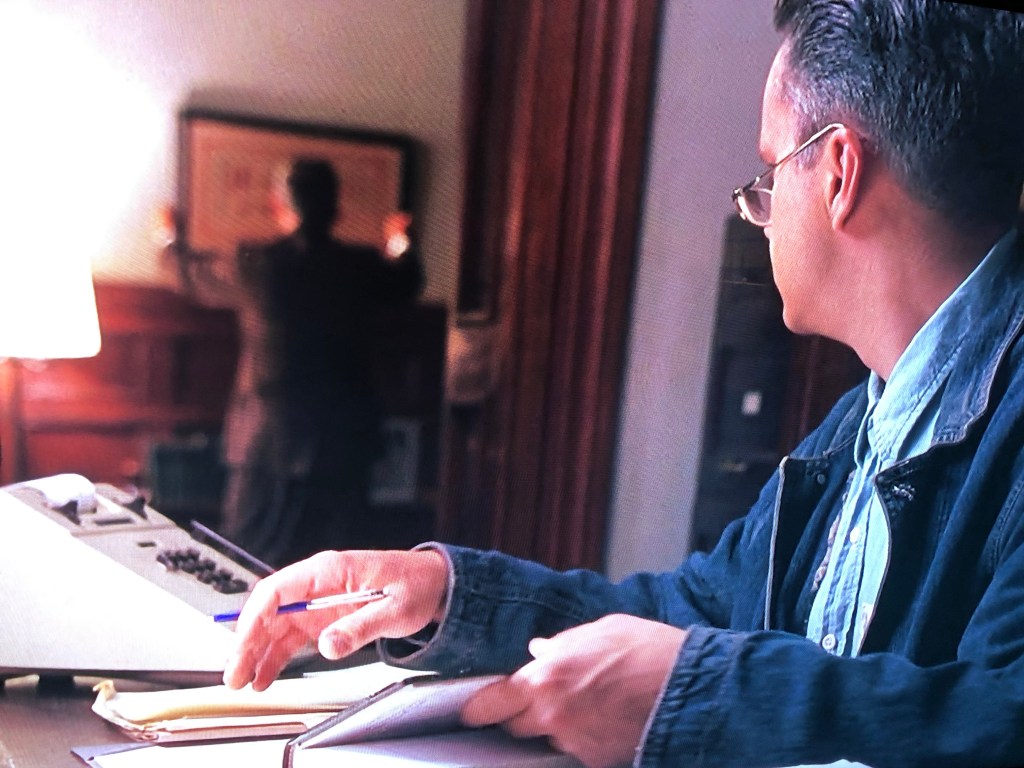
Shawshank’s jotter was one of the earliest sightings for me and it made too much sense until I watched the film with my 14 year old. Remember the first time you saw it? The friendships – beautiful, the violence – despair, and the tarring of the roof – disarming. And then, Andy escapes Shawshank.
IMDB lists Shawshank as the most popular film of all time. It wasn’t popular until it was nominated for 8 academy awards.
The warden writes with a Schaeffer Snorkel – a beautiful pen, the most complex fountain pen manufactured, and retails for about 75. This one is seen on his desk when Andy plays the opera over the prison yard.
Andy’s jotter is utilized to sign the last documents he signs for the warden. Did you ever imagine justice? Red and Andy on the beach of Zihuatanejo? And in your wildest dreams, pausing the movie to grab another drink or a snack, did you imagine it would be so swift, cruel, and violent? Even after so many months in the hole, his spirit seemingly broken, that glare of hatred, in the face of such obtuseness, is Tim Robbins at his best.
Roger Ebert points out that none of the movie is seen from Andy’s perspective, but from everyone around him, most often from Freeman. Is this the one scene in which we see things from Andy’s perspective?
I don’t need to add to the many, many lines written about this film. But it is an excellent jotter sighting.
My friends abide with the fact that I like to call small rooms and anything resembling a porch a Lanai. About every sixth time my wife chuckles. She knows that my two main forms of humor are sarcasm and repetition.
While I loved Fletch as a child, Roger Ebert did not, “But whenever the movie threatens to work, there’s Chevy Chase with his monotone, deadpan cynicism, distancing himself from the material.” And he’s right. Perhaps not to this degree, but the actual character of I.M. Fletcher is far more suited to John Hamm and his particular skillset, energy, and John Hamm-ness. Brian Tallerico, taking almost the opposite approach of Ebert, ended with a similar review of the new film.
I’m no movie critic, but I also didn’t mind enjoying Confess, Fletch.
She is very distracted by Mr. Fletcher’s feet
And here, with textbook jotter placement and role, is Griz.
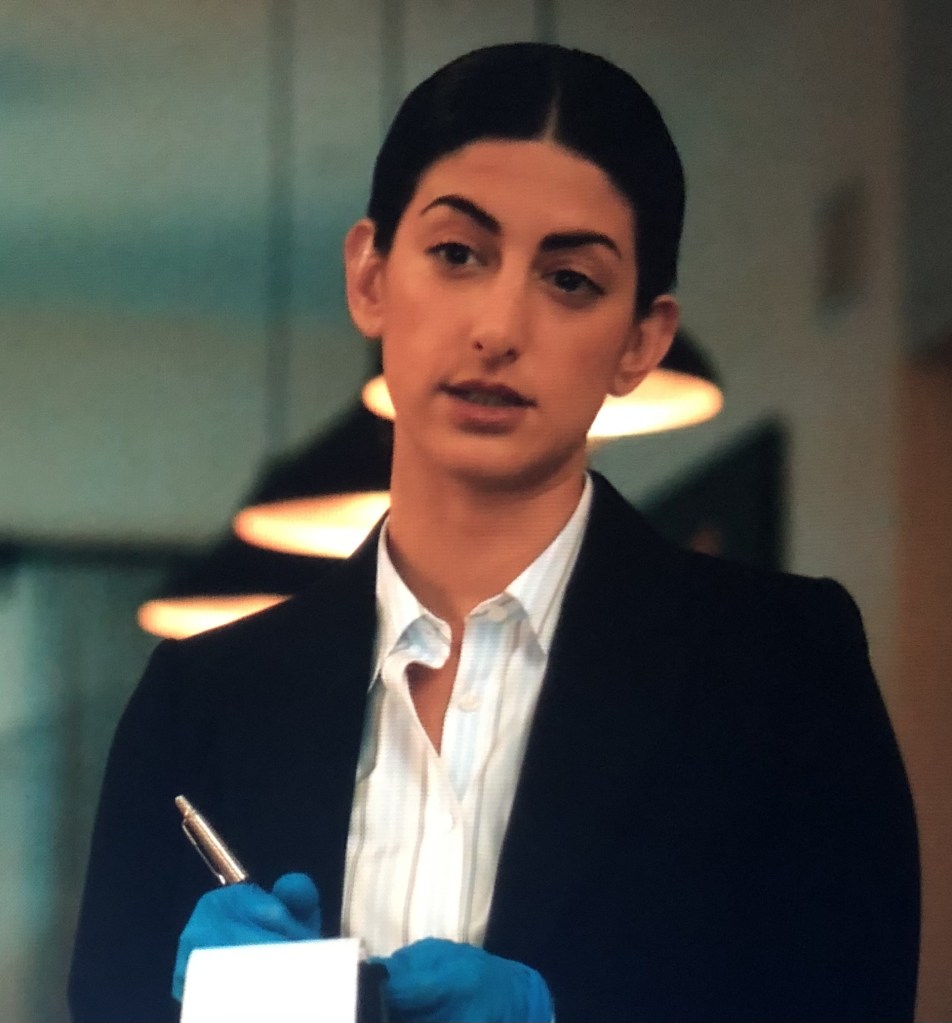
She has a medium-length role, perfect for the jotter placement.
Deck Shifflet is squirmy. Confident; knows his limits. The jotter appears when we learn the full resources of Deck, applied to helping Rudy win. Deck pulls poor Rudy Baylor from the clutches of Bruiser in the nick of time; convincing him to set up a new law firm. In the moment above he contacts Bruiser for help; which no one knows is possible nor wise, nor beneficial. Bruiser recalls an actual law statue (though labeled differently) corrects a misunderstood and mis adapted part of the law (rare for Coppola and Grishham to miss) through Bruiser’s (Mickey Rourke) exceptional memory, especially as it applies to breaking the law while winning cases.
In a film with an obvious hero — Rudy Baylor/Matt Damon. A slimy good guy — Bruiser. A slough of slime — Jon Voight, Roy Schieder. A brilliant judge — Danny Glover. We could easily miss the brilliant efficiency of this film, the substance, tone and heart of Damon and Devito as they walk with each of their clients — as it tuns out, none of whom will pay them.
This is the moment we can tell Devito is utilizing a Parker Jotter, the preeminent Hollywood prop whispering, “Do not miss the nobility of this character.” Earlier in the film, when he is training Rudy in ambulance chasing he has a pen, but we do not get a good look at it. It sounds like a jotter, but we are not sure. In retrospect, this is how the jotter works indirectly. We don’t yet know if we can trust him. We like him — he knows the doctor and the security guard by name… charming? Sure. Does he benefit? Yes. We do not know as they leave the hospital whether we can trust or rely upon Deck Schiffler.
This is widely believed to be the best adaptation of a Grisham novel. Coppola captures the near disgust Baylor has for his chosen profession — much different than the energy of Cusack/Hackman/Hoffmann in Runaway Jury, Roberts/Washington in the Pelican Brief, and easily of Cruise/Tripplehorn/Hackman in the Firm. It is also Grisham’s favorite of the adaptations.
Point Break is a delight. Keanu masters the actions/unintentional comedy/hair of action movies, and you can argue that he did as much to develop the genre as anyone. For those of you who are thinking about Die Hard right now, watch the first 25 minutes of both movies. Die Hard is a terrific film, but less constant-action than Point Break. And those who are thinking of the Fast and the Furious, it is quite clear that it is ripping off Point Break — with a hat tip at the same diner Johnny meets Tyler. Roger Ebert gave it 3.5 stars. And says this about Kathryn Bigelow, the director, “Bigelow is an interesting director for this material. She is interested in the ways her characters live dangerously for philosophical reasons. They aren’t men of action, but men of thought who choose action as a way of expressing their beliefs.” She also directed Blue Steel, which is one of the scariest movies I saw in the 80s. Even scarier than Gremlins.
Ebert explains that we ought not dwell on the plot of the film. If we can suspend such summaries we are led into the delight of Point Break. A friend of a friend once performed Point Break in an Improv studio. Every actor was a pro except the one who played Keanu — that one was from the audience. It worked like a charm. Rather than mocking, this can perhaps shed some light on the fact that everyone in this film is absolutely going for it.
Gary Busey is terrific. He is talking shit about Utah, who he has not yet met, with a blindfold on before undergoing an odd test for FBI agents back in LA in the early 90s. The iconic line of the scene, almost never relevant in my own life is, “Welcome to sea world kid”. He’s funny, smart, doesn’t like his boss (“Harp”, played by John C. McGinley, who has done a LOT of voice work, and was a delight in Scrubs), and receives Keanu’s energy at the beginning of the film to propel them towards the Ex -Presidents.
In their first investigation, Busey has a blue Parker Jotter. You see it about five times. It does not show up for the rest of the film. No way the hero has or needs one — we enjoy his role in the film, but there isn’t a shred of nobility to him that isn’t obvious, he’s arrogant as the day is long. The magic centers around Utah and Bodhi. Bodhi’s amoral, but compelling, leadership and drive. “This was never about money… it is about us against the system!” With Busey balancing their wildly ridiculous energy. Just enough madness. And meatball sandwiches.
Busey is the key to this film staying an action movie, and not becoming a buddy cop movie. “Utah! Get me two!” They work together well, but will rarely go get a beer after work. Busey keeps the tension right where it should be — between Utah and Bodhi — never letting their boss take up too much airtime. Quickly dispatching the violent naked women of war-child’s gun house, and stealing Johnny from the crime scene he participated in.






 Jotter in Film